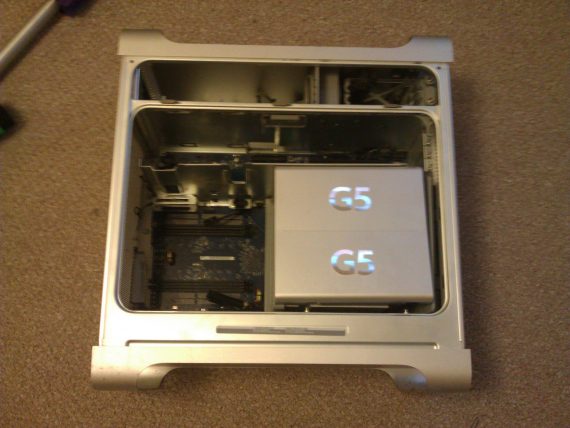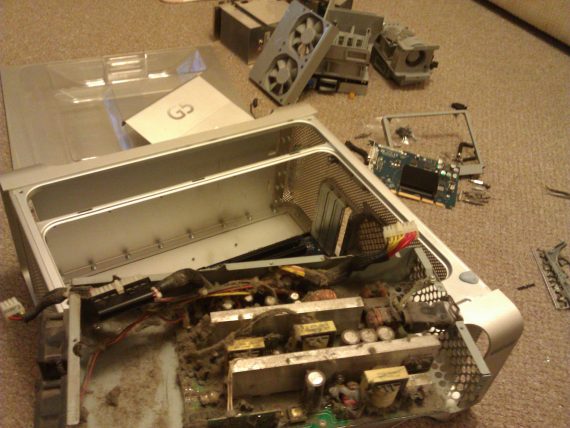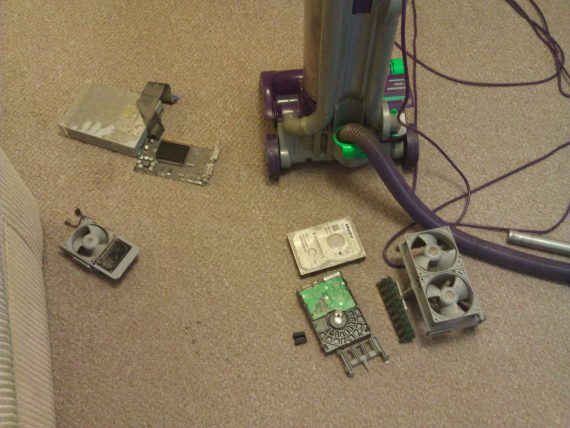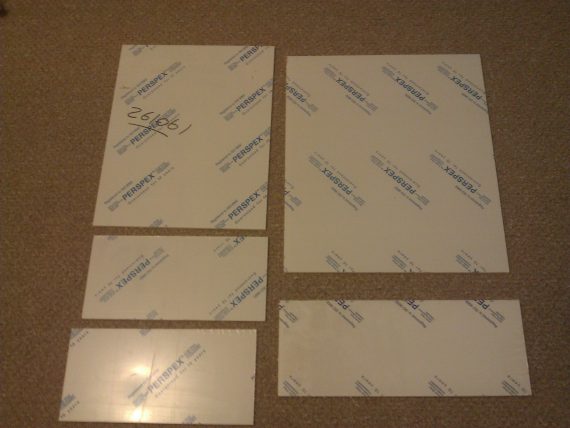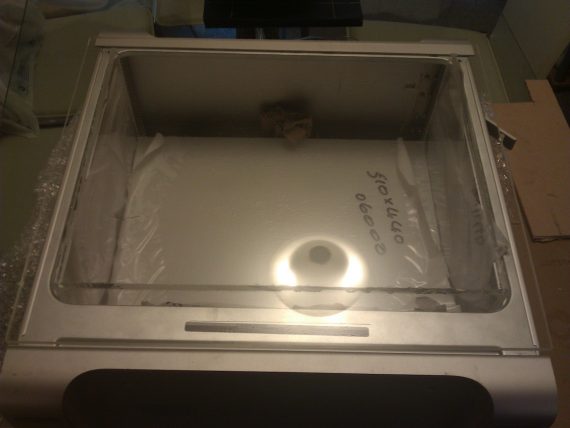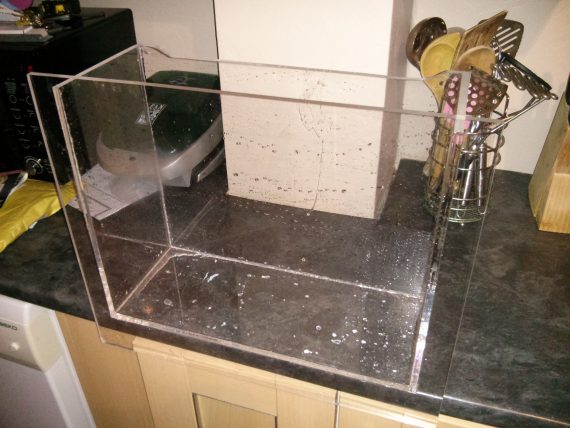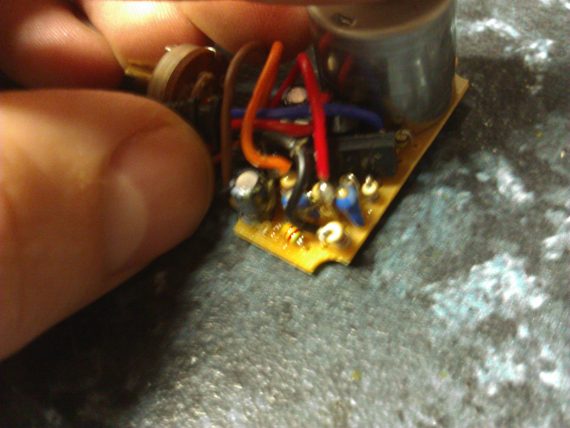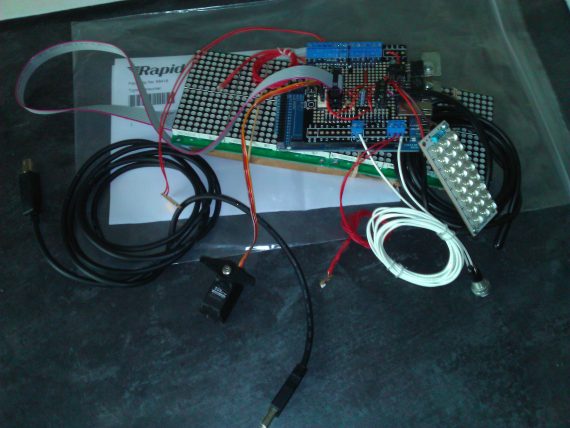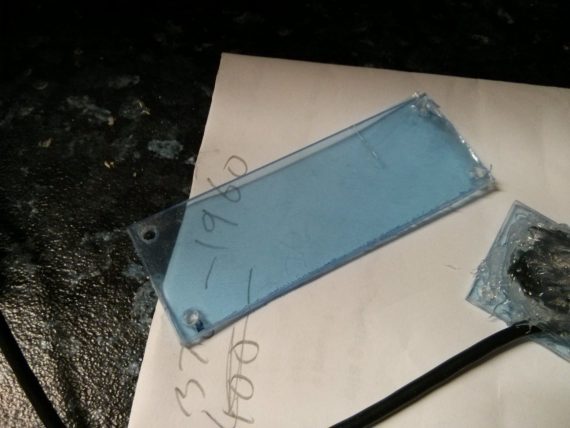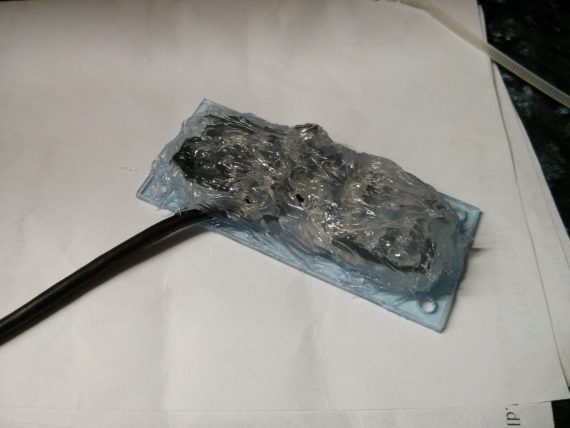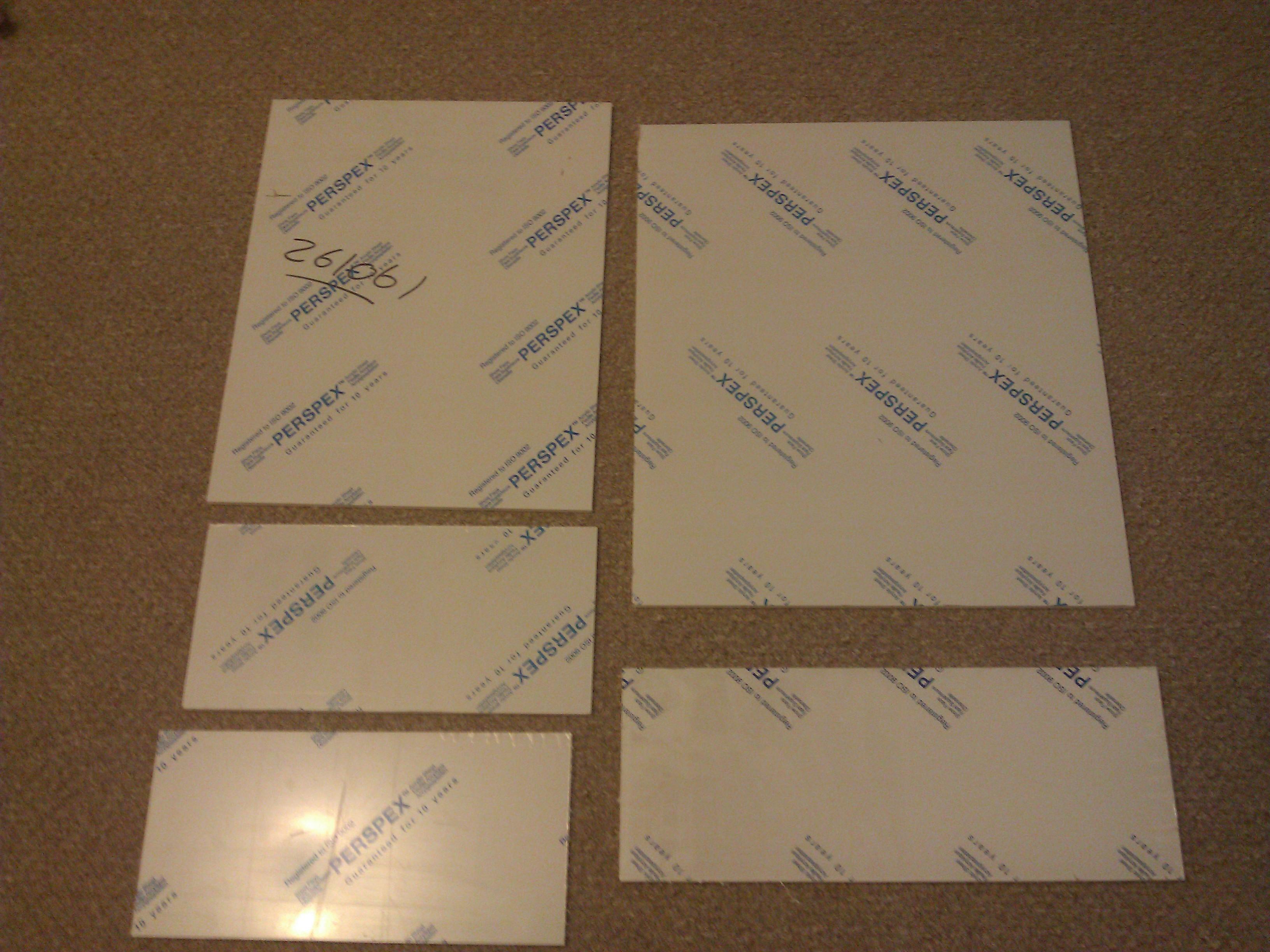
Acrylic arrived! 8mm clear cast acrylic to be precise. Sorry, I forgot to take a photo of measuring up the case. After measuring thrice and drawing sketches, I placed my order from Bay Plastics.

It fits! Sorry, I forgot to take a pic of the gluing process. Trust me, you haven't missed much ;). I used Tensol 70 acrylic cement. This stuff has a thicker viscosity than some stuff. Some people also use Weld-on.

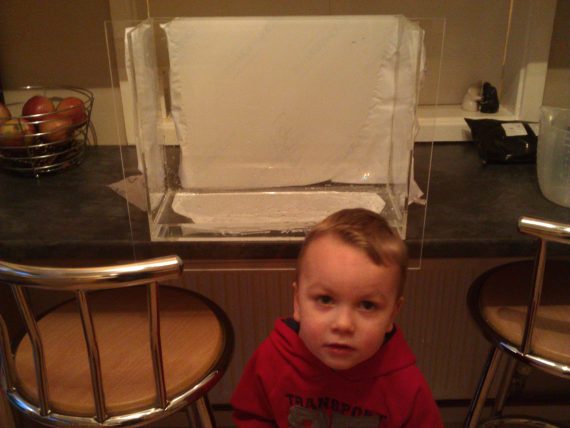
First tentative water test. Didn't have much faith in my gluing skills at this stage but if done properly, acrylic welding should be as strong as the acrylic itself. Also, a cameo appearance from my son, Ryan.

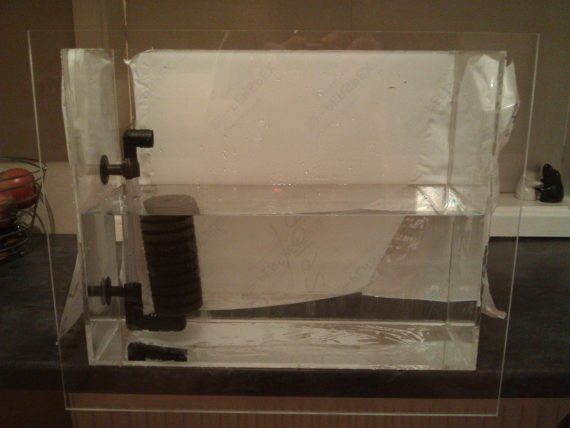
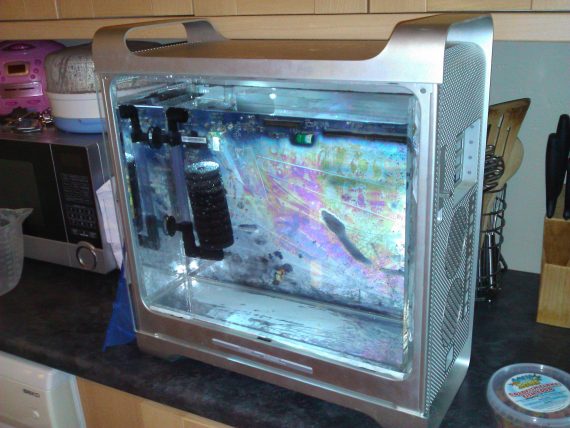
Added a bit more water once I realised the kitchen hadn't flooded. Added the water filter just because.

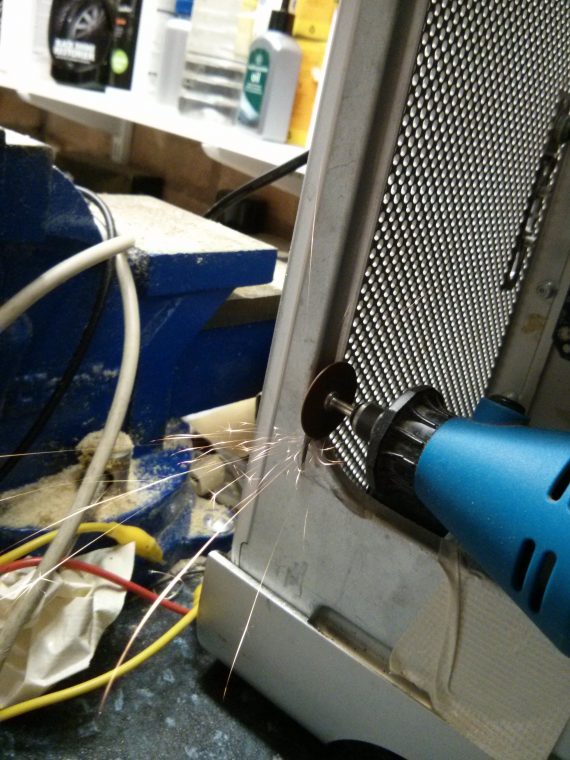
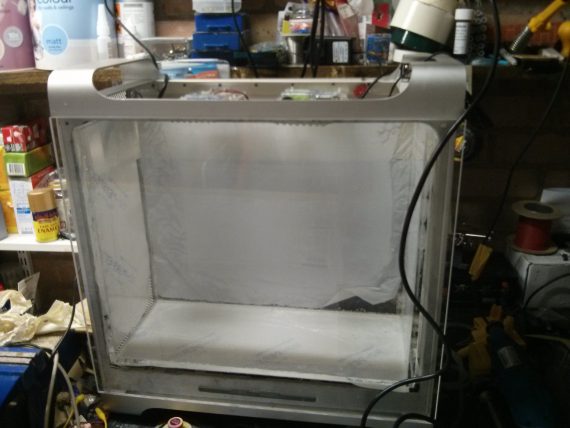
Bit of case trimming using my trusty multi-tool. If you do make projects, get one. Seriously.

It fits better! Actually there were two tank builds after I learned the hard way that 6mm acrylic was not sufficient and it bowed. This is the new 8mm tank. There are free online calculators for working out the required acrylic thickness. I strongly recommend you follow recommendations!
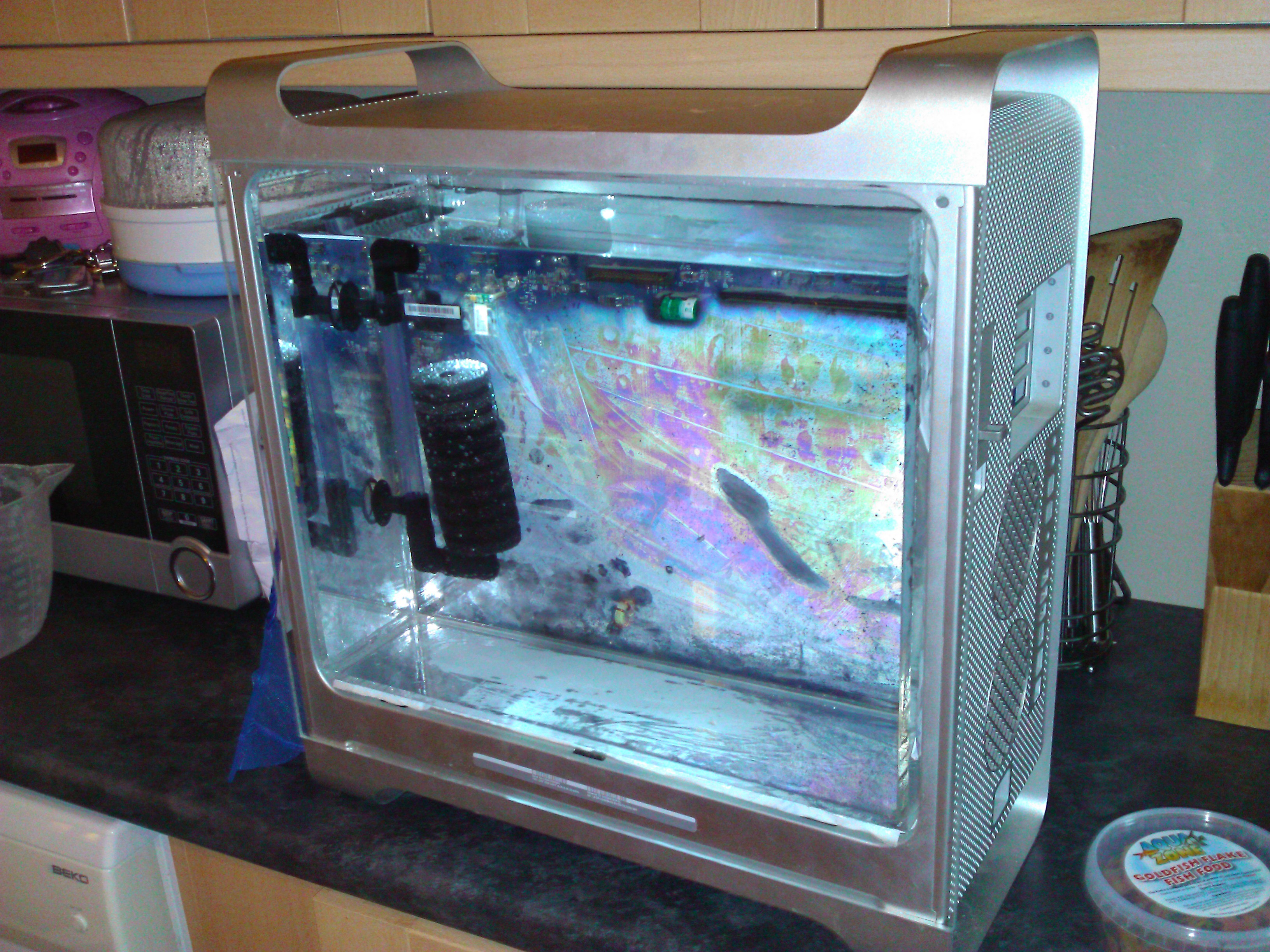
Full water test with some proof-of-concept LED keychains blu-tacked in the case. This was the moment I realised that my crazy idea just might work…

The tank with protective wrapper removed. Notice the slope at the back. I had to cut this with a Jigsaw as it would have fouled the lights otherwise. Probably should have constructed the tank part last!

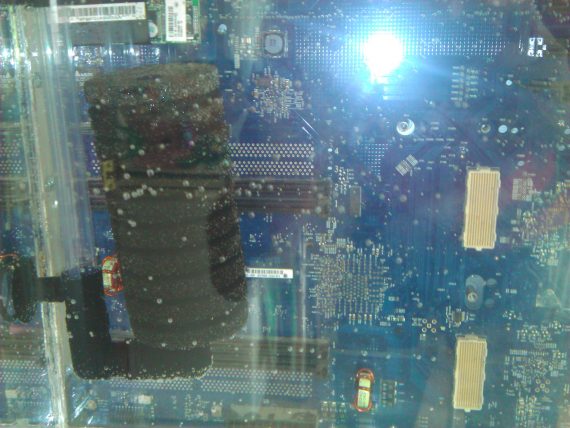
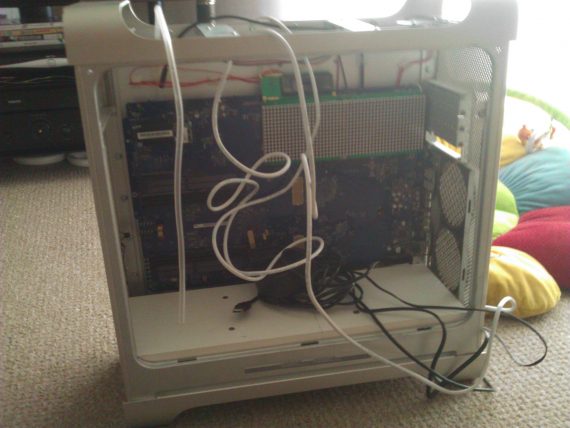
I put the original Mac mainboard back in behind the tank to see if it would look like it's underwater. It does and it is awesome.

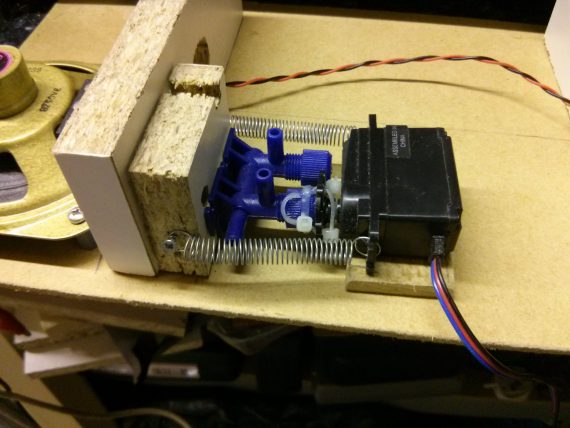
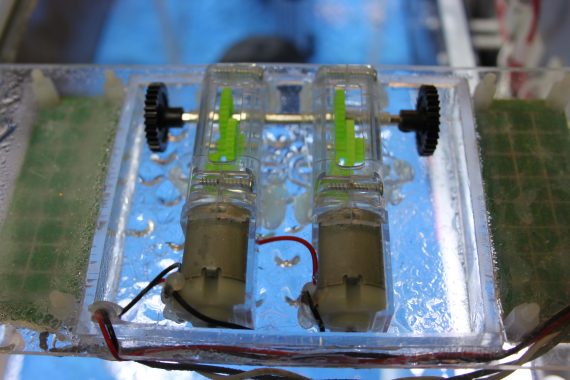
Servo hacking to allow continuous rotation. Lots of tutorials on this online, also loads of Youtube videos.

Initial electronics to get the main parts working together. This is before the auto feeder existed.

To make webcam more slimline, I had the idea of placing the webcam PCB on the back of some clear acrylic and covering with silicone sealant to make it waterproof. It will not be submersed however.

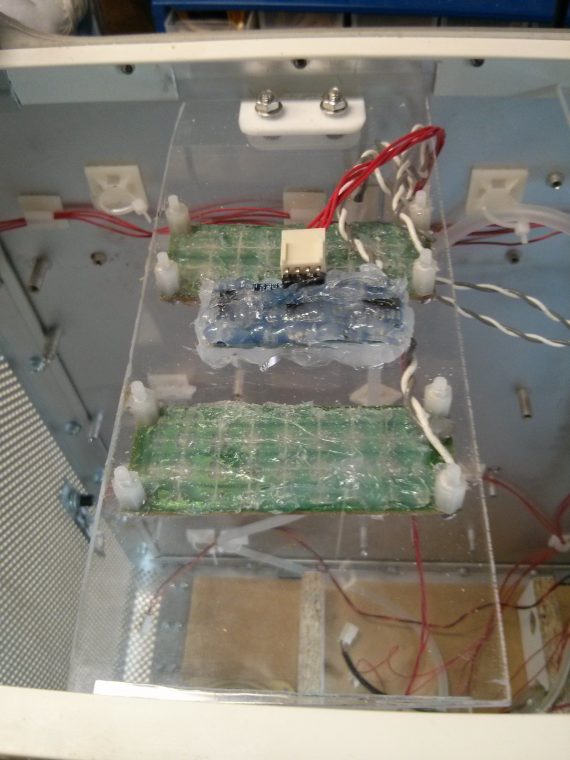
Webcam electronics in place on the acrylic and covered with silicone. Make sure the lens and acrylic are dust free!

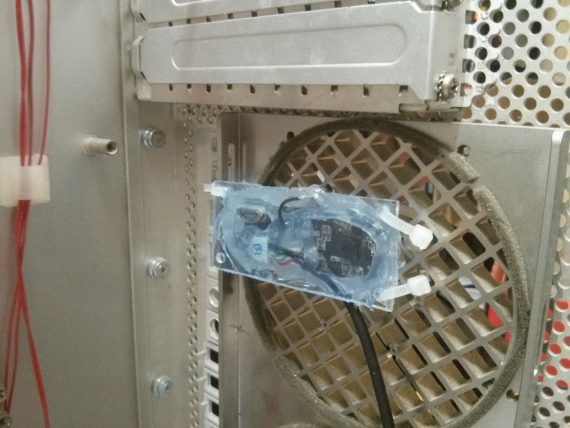
Webcam in place using a few cable ties. It turned out the camera was upside-down but Iuckily ffmpeg has a commandl line switch that allows you to rotate the video feed. Easy! The blueness is the protective cover still on the acrylic.

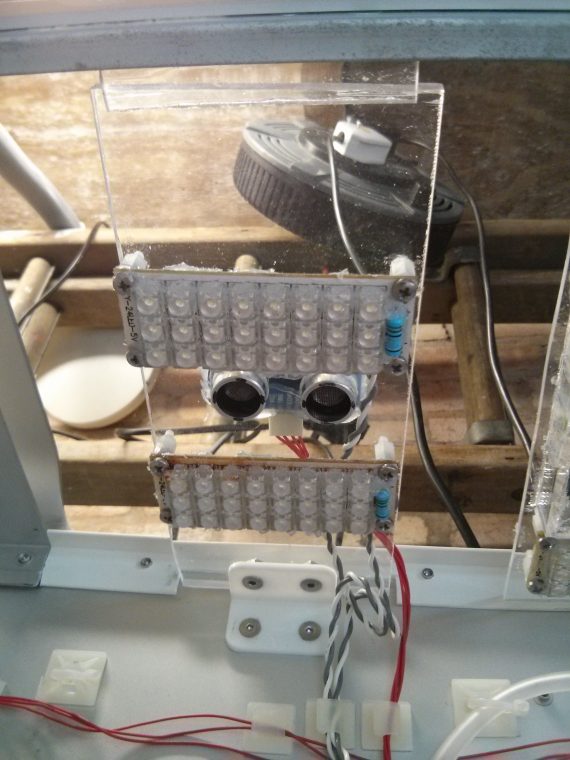
The lighting and ultrasonic transducer mounted on some acrylic. Notice the plastic hinge I found on eBay. This allows the unit to be lifted so you can reach into the tank.

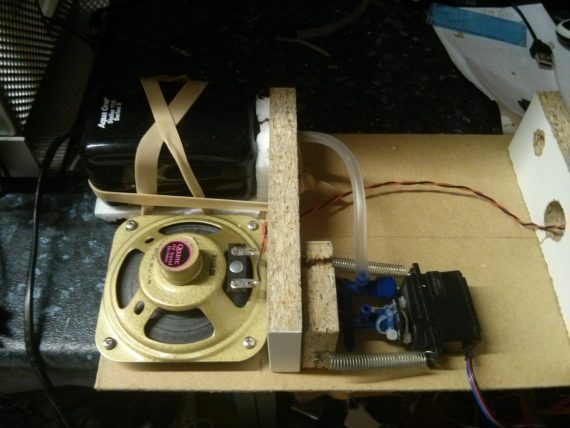
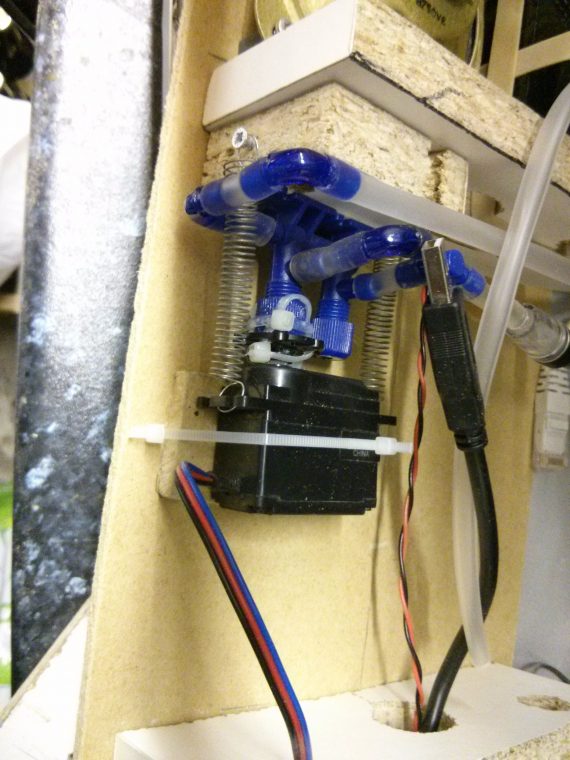
Airlines fitted. Right angles prevent kinks in the pipe. Well worth the tiny investment if you ask me.

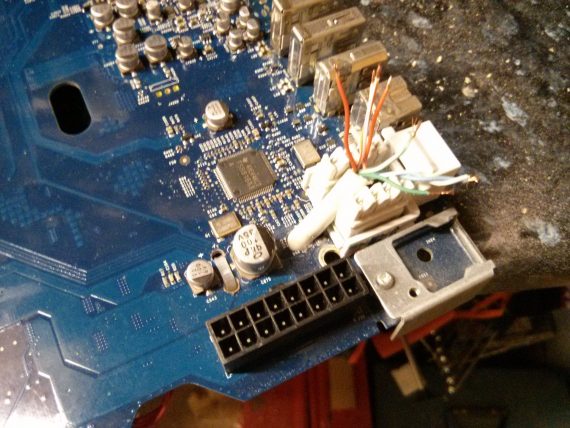
Fitting the Ethernet RJ45 socket right where the original used to be. This means I have a nice neat socket as the original Mac had. Much neater than having cables exit the back of the unit via a hole

Fitting the first wires. I used self adhesive clips from eBay to make it all nice and neat. This is an early picture hence the electronics and pump layout not matching other pictures. I later revised the layout so I could access the Arduino without pulling it out first.

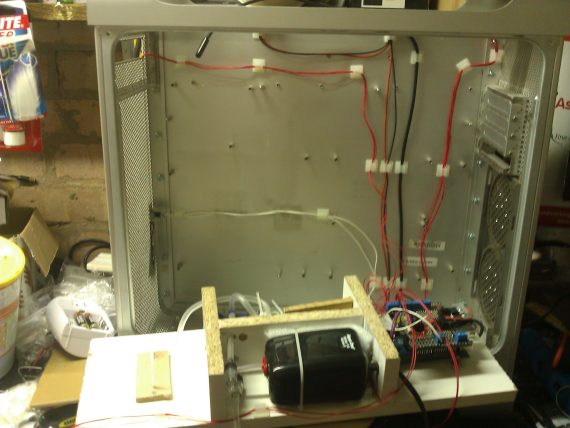
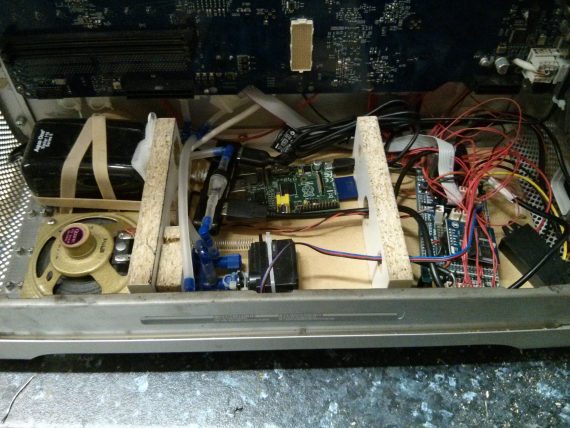
The final layout of electronics. Everything can be fitted and then a piece of chipboard just placed on top. Much more effective use of space. Notice the Raspberry Pi in the middle.

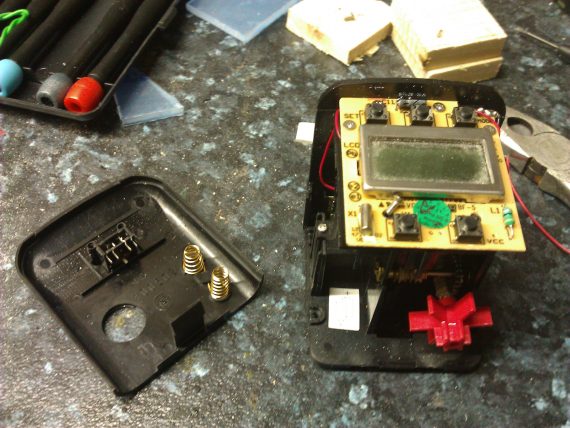
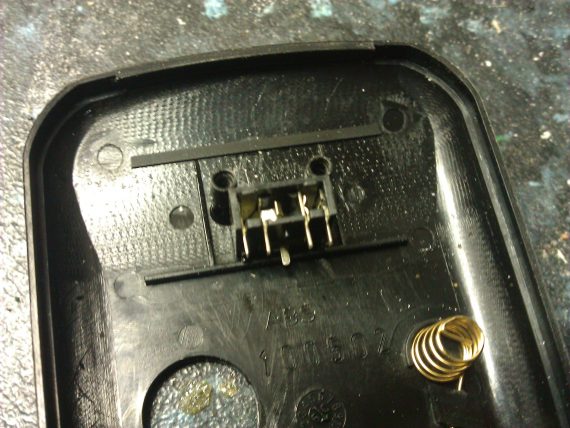
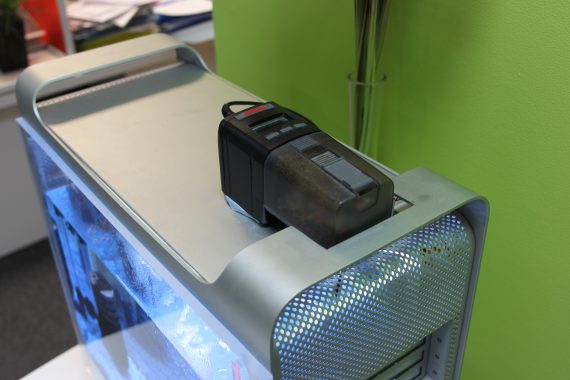
Hacking the Eheim auto fish feeder. Got this unit off Amazon and they work great. I connected a jack plug to the connections of the feed button and disabled it's own autofeed timer

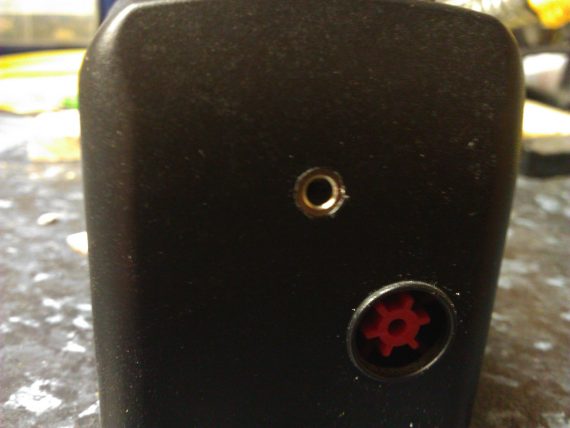
Close-up of the jack plug. Added plenty of glue afterwards

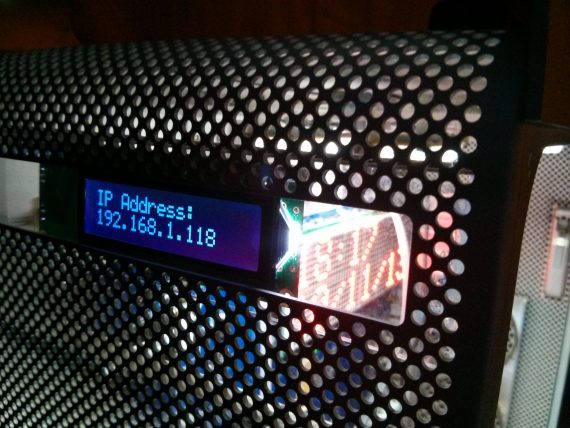
The LCD display mounted to a piece of clear acrylic where the old DVD-ROM used to be. This LCD has a serial backpack which makes talking to it easy. Got this off Sparkfun.

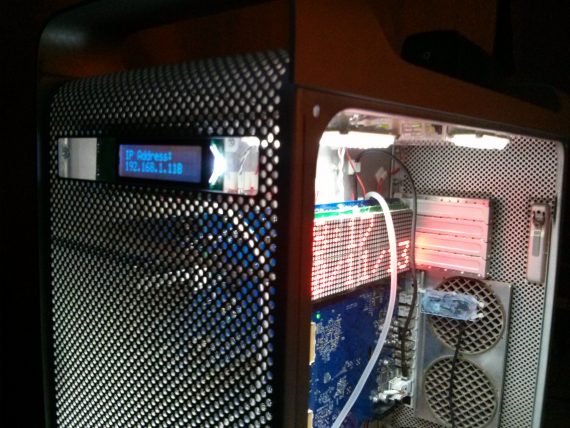
Another shot of the LCD display with the LED Matrix in the background.

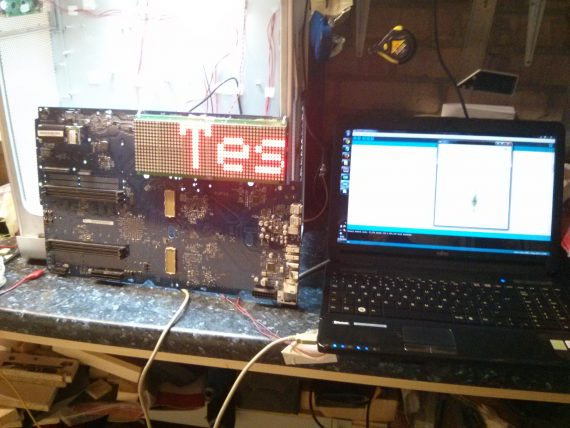
Testing the LED matrix display. This is two displays daisy-chained to make one. Bought this from Adafruit. They have a great range to choose from. I have since bought more of these for a new project.